
1. The Simpsons never leaves the group chat 📺🔥
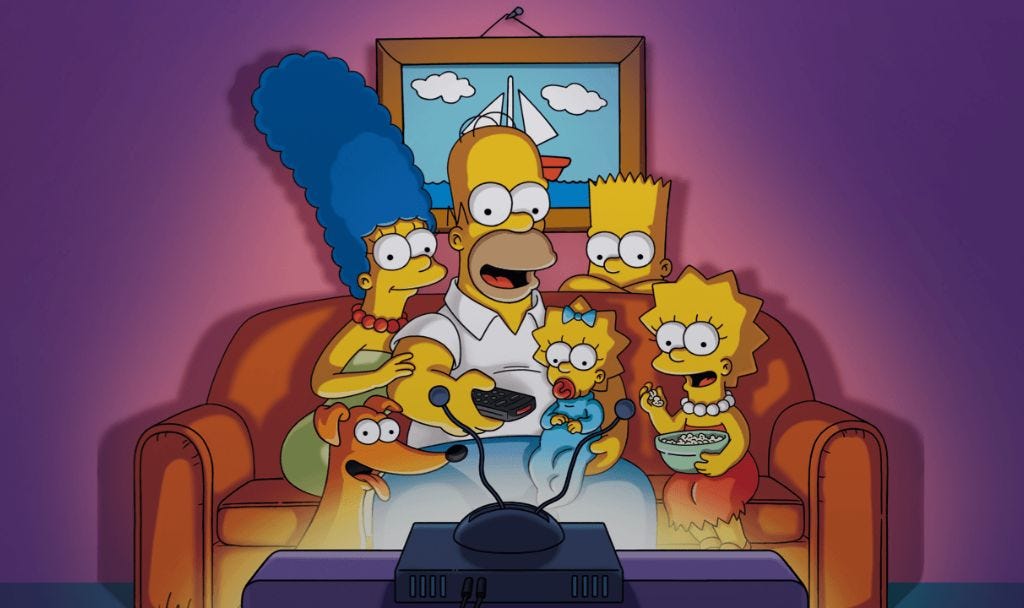
The long-running animated sitcom isn’t just a cartoon — it’s pop-culture folklore. Since 1989, it has roasted politics, tech, media, and everyday life through the Simpson family in the fictional town of Springfield.
Its jokes are instantly recognisable, endlessly meme-able, and often built around emerging trends, technologies, and headline moments.
Decades later, clips from the show keep resurfacing online — linking old jokes to new events and giving the series a “prophetic” reputation.
Recently, it trended again after co-creator Matt Groening was mentioned in documents related to Epstein.
And once again, the internet asked: Did The Simpsons know? 👀
2. Time + math were always going to cook 🔢😵
Over 35+ years, the show has produced thousands of jokes about society and where it might be headed.
Statistically, some were always going to line up with real-world events. Longtime showrunner Al Jean has addressed this directly: it’s cherry-picking. Out of decades of material, people spotlight the few moments that resemble reality — and ignore the hundreds that didn’t.
It feels shocking because we’re shown the hits — rarely the misses.
That’s not prophecy. That’s probability doing what probability does.
3. The Simpsons didn’t “predict”, they observed 🧠📈
When the show portrayed Donald Trump as president, showed video calls, or mocked smart technology — it wasn’t mystical foresight 🔮❌.
The signs were already there.
Trump had publicly floated presidential ambitions as early as 2000. Tech was accelerating. Surveillance culture was expanding.
The writers weren’t predicting the future. They were watching politics, media, technology, and human behaviour — then pushing those patterns to their logical extremes.
They were essentially asking:
“If this continues, where does it lead?”
That’s uncommon sense. Not a crystal ball.
4. Many “predictions” are fake, edited, or taken out of context 🖼️🚨
A huge chunk of viral “Simpsons predicted it!” posts don’t come from actual episodes.
Screenshots get photoshopped. Clips are cropped. Timelines are flipped. Jokes are reframed to look eerie in hindsight. Once it goes viral, almost nobody checks the original context.
Examples 👇
• The word “Coronavirus” digitally added to the 1993 Osaka Flu episode
• A fake Notre-Dame fire scene that circulated in 2019
• A fabricated Kobe Bryant helicopter crash “prediction” that never aired
The show’s creators have repeatedly said this happens: fake scenes are created after real events — then passed around as evidence 😬📲.
In the meme economy, coincidence often gets upgraded to prophecy.
5. No context, yes conspiracies 🧵🕵️
After Matt Groening appeared in Epstein-related documents, some corners of the internet escalated the narrative. The claim wasn’t just that the show had predicted events — but that it was somehow “confessing.”
This mirrors narratives common in QAnon circles — the belief that secret elites plan world events and leave coded hints in pop culture.
There’s no credible evidence for that.
It’s what happens when satire is stripped of context and reframed as “predictive programming” — connecting dots that were never connected ❌.
PS
The “The Simpsons knew” idea never really dies because it’s fast, shareable, and satisfying.
One clip can instantly roast a politician, a corporation, or a breaking news moment. No deep dive required. The joke lands. It gets reposted. It trends.
It feels clever. It feels spooky. It feels meaningful.
But most of the time, it’s just a cartoon doing what satire does best — exaggerating reality until it feels uncomfortably familiar.